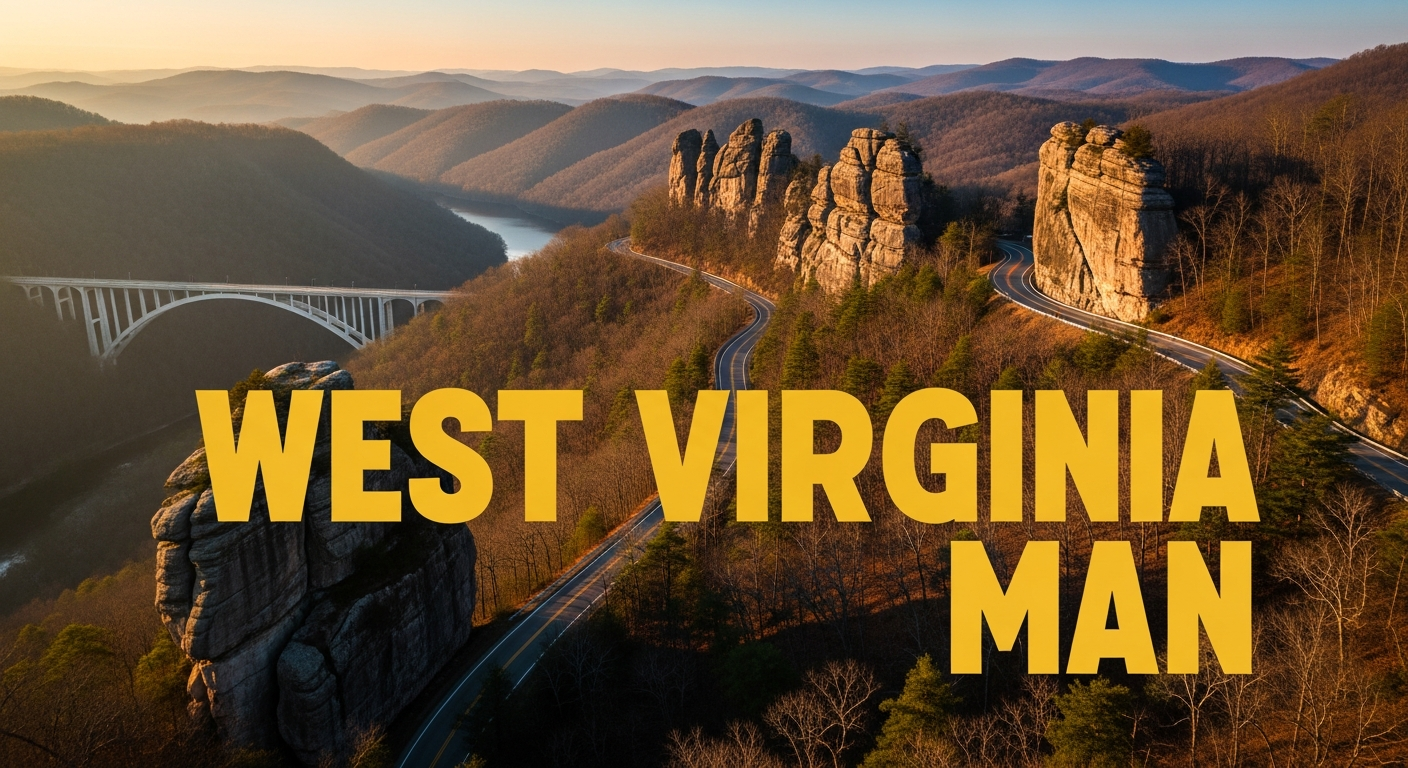
I owe my soul to the company store Man
West Virginia is a state built on coal, and its history is everywhere you look. Recently, we took a trip to the Beckley Exhibition Coal Mine, and the history lesson I got there was a real eye-opener.
It’s easy to romanticize the era—you think of heroic, gritty miners covered in coal dust, or maybe you hum a few bars of "Coal Miner’s Daughter." But the truth is far darker. It was a brutal life that didn't just bind a man to his job; it bound his entire family for generations.
Taking the tour as a 6’6” man was… an experience. Being that tall in a world built for low ceilings is never helpful. Luckily, most of the tour involved riding on a mining cart, so my head was safe for the most part. But as we moved through the dark tunnels, our guide began to explain the tools, the safety (or lack thereof), and the logistics. Then, he started to sing.
He sang “Sixteen Tons,” the Merle Travis song from 1947. If you know the lyrics, you know the line: “I owe my soul to the company store.”
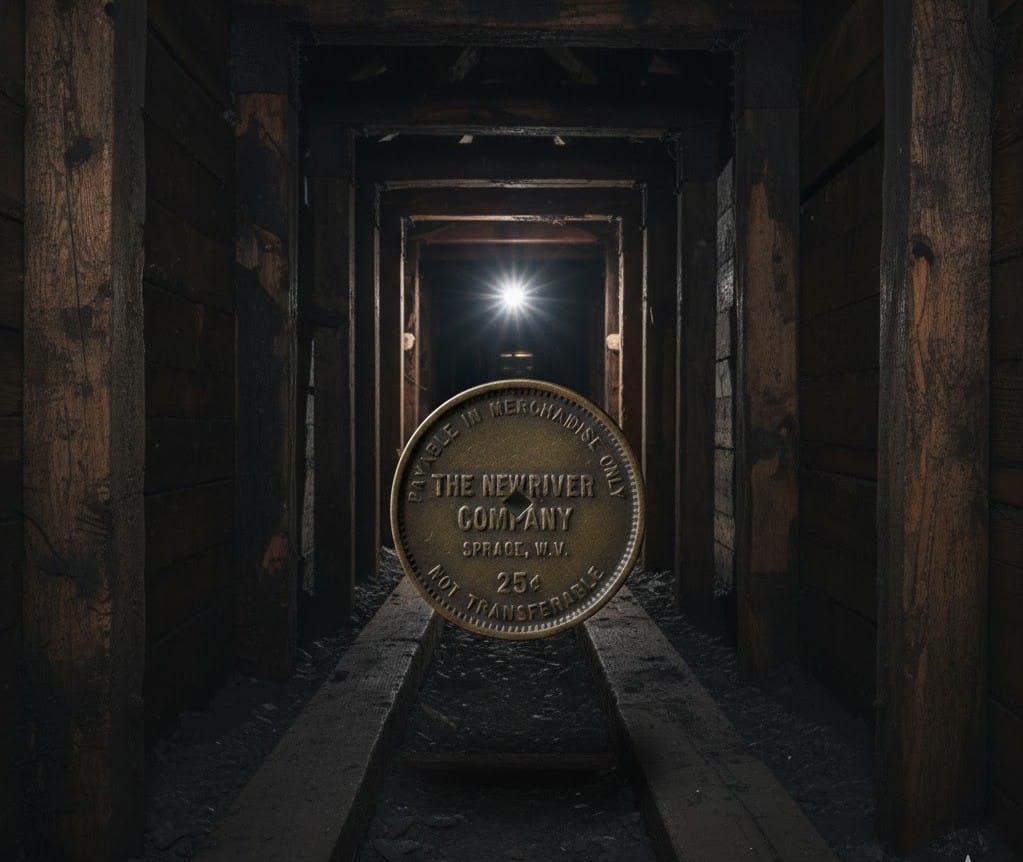
I learned that miners weren’t paid in U.S. Dollars. They were paid in something called Scrip. This was private currency issued by the coal company that could only be spent at the company-owned stores for food, rent, and supplies.
The system was designed to be a trap. Since you had to buy your own mining equipment before you even started, you began your career in debt. At the end of the month, any Scrip you had left over went toward that debt—but the debt almost always grew faster than the wages. The company provided the housing, the food, and the schools, but you paid for it all with their "fake" money, sinking deeper into a hole you could never climb out of.
The worst part? If a miner died or couldn't work, his debt didn't vanish. His son would inherit it, often starting work in the mines as young as ten years old just to pay off his father's life.
It was a sad, intriguing, and honestly haunting look at capitalism at its worst—modern slavery disguised as "free labor." Thankfully, the use of Scrip became obsolete in the late 50s and was finally outlawed in 1967.
Stepping back out into the West Virginia sunshine after that tour, I had a much deeper respect for the people who lived through that. It’s a lot to process, but it’s a part of this state’s DNA that you have to understand if you’re going to call this place home.