
I'm not Hemingway, Man
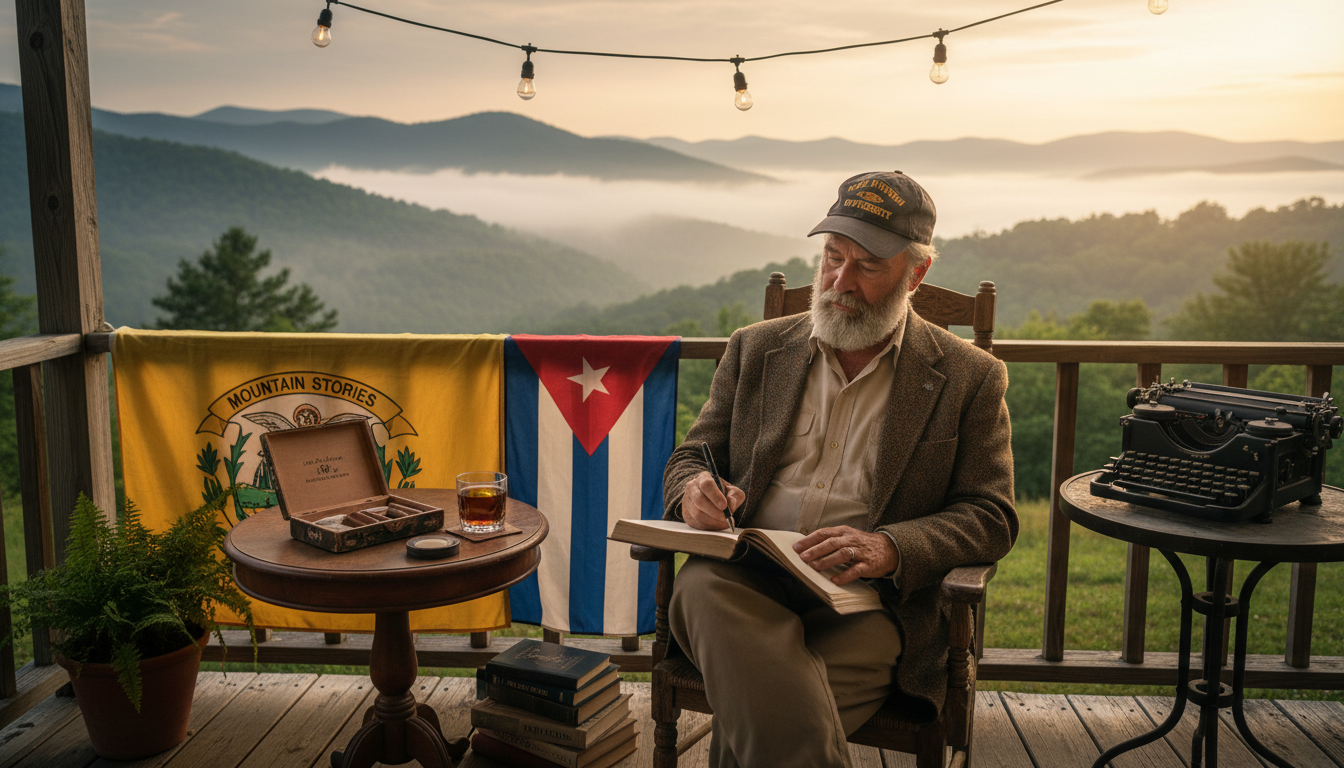
A few weeks ago, I started a new project: writing a book.
I guess having a sister who has written a few books, and a son who enjoyed writing as well, makes it almost normal for me to start too. No worries, it’s not going to be the next Tolstoy or Tolkien, nor is it likely to be Pulitzer or Booker Prize-worthy—although, a man can dream.
This is something that has been on the back of my mind for quite a few years now. Years ago, I tossed the basic idea into an AI, and lo and behold, it came up with a story. It was bland, uninspired, and completely lacked the heart of what I actually wanted. Since I didn’t have the time or the energy back then to sit down and write it myself, the idea went back on the shelf.
Move the clock forward five years, and here I am, writing a blog about writing a book. And let me tell you, it is hard. It is a massive amount of work—writing, rewriting, more rewriting, throwing stuff away, and then coming up with another "wonderful" idea that suddenly forces you to rewrite half of what you thought was already finished.
Slowly, though, it is taking shape. It’s not aimed at adults, but rather the 7-to-12-year-old age bracket. And since I am living in America, that choice brings a unique set of hurdles. Otherwise, I wouldn't be writing this blog.
First off, Dutch storytelling differs wildly from American books for that age group. The school system here has dictated a stringent form to which an author must comply just to be allowed on a school library shelf. Where Dutch stories are generally slower, focusing on building up the world and the vocabulary without being afraid to use "big" words, American books require brevity. They need short sentences, short chapters, a heavy focus on immediate action, and preferably a cliffhanger for each chapter.
In the Netherlands, schools use the AVI system, which suggests what level a kid should be able to read based on their development. Here in the US, the educational system relies on two main data-driven gatekeepers.
The first is Lexile, which tries to mathematically quantify the length of sentences and the complexity of the words used to output a score. Short sentences lower the score; difficult words make it go up. The fatal flaw? Stephen King can write a gritty psychological thriller that mathematically falls into a 3rd-grade reading slot simply because his sentences are short and punchy.
The second system is ATOS, which basically does the same thing but slaps a specific grade level and month onto the book. A score of 4.5, for example, means it is designated for Grade 4, Month 5.
I have yet to find a single school in the Netherlands that will look a child in the eye and say, "I'm sorry, you have to wait three more weeks before you can read this book because it's only April."
Thankfully, we went to the local library. The very friendly librarian there absolutely loved the concept of my book and told me exactly what I needed to hear: write what you want, not what the school system dictates. She assured me there are plenty of places to have your book featured when the day arrives—even in the library itself.
I even ended up borrowing a few children’s books just to get my mind back into the headspace of that age group. When you hit 60, remembering what books you read at age eight is a bit of a stretch. Picture this: a 6’6” tall man with grey hair and a beard, reading a children's book while sitting there among dozens of kids who had just finished their story hour.
In the end, I got my library card—naturally, I picked the one with the Mothman on it—and back home we went.
It was genuinely nice to see all those kids coming in to be read to during the holiday season. Nowadays, it is hard enough to get them to pick up a book, and even harder to keep them reading once they hit a certain age. Internet and social media have a massive reach. Audiobooks have opened up a new market for a generation that doesn't have the patience to just sit at home and turn pages, but instant gratification is king now, and physical books don't easily fit into that equation.
So after all this, it's back to writing again. Because my book is a mix of fantasy and folklore but firmly rooted in the real world around the 1760s, it involves an incredible amount of research. In fact, that is where most of my time goes.
But honestly, it is incredibly fun and educational. For instance, I never knew that drinking water on a sailboat traveling from Rotterdam to Philadelphia would turn vibrant green after three to four weeks due to algae. Then, when the algae died, it would turn a muddy black-brown and smell like rotten eggs. And then, it would naturally clear up again, leaving a distinct, rusty iron taste from the metal hoops of the barrels.
It drives me a bit crazy when I see how mainstream media handles history. I read about a new movie called Young Benjamin, which follows a young Benjamin Franklin. In the film, they place him in a setting surrounded by rolling mountains. In real life, that area is as flat as a pancake with no mountain in sight—but they just do it anyway because it looks nice on camera.
Meanwhile, here I am, meticulously checking the exact number of days it would take to walk between Philadelphia and Lancaster to ensure it's mathematically correct, or verifying that a town in Sweden I'm writing about actually is next to a real mountain.
Navigating educational metrics while maintaining strict historical accuracy is a whole new kind of writing challenge. I might have to trade a few of my naturally long European sentences for some fast-paced American action, but the journey has officially begun.