The Forced Air Man
Winter still rears its cold head here every now and then, though "winter" is a loose term in the mountains. In West Virginia, the weather is a chaotic performance; you can expect summer temperatures at lunch and a snowstorm by dinner. Back in the Netherlands, our weather conversations are predictable: it’s raining, it just stopped raining, or it’s about to start raining. Here, the locals jokingly refer to the seasons by the hour: "What season is it going to be this afternoon?"
This atmospheric rollercoaster brings me to the great mystery of American heating and cooling.
Most houses in the Netherlands are built with heavy brick and concrete, designed to hold onto radiant heat. We use hot-water-filled radiators that slowly and steadily emit warmth into a room. It’s a patient process. As a kid—and, if I’m honest, as a 6'6" adult—there was no better place to be on a freezing day than tucked against a warm radiator, feeling the heat sink into your bones. It’s a silent, efficient system that warms the physical house itself, easily regulated by modern smart tech.
Not so in America. Because the Appalachian summers are brutal enough to wilt a tulip, you don’t just need heat; you need industrial-strength air conditioning. The solution here is the "dual system"—a massive furnace and a cooler joined at the hip, using air as the delivery man.
There is no "subtle" climate control here. You don’t get a gentle rise in temperature; you get a hurricane-force blast of hot or cold wind that announces its arrival with a roar. When the thermostat clicks, the house comes alive with the sound of rushing air and whirring machinery. If you happen to sit near a floor vent, one half of your body will freeze while you watch your guests across the room begin to sweat. It’s a game of "vent roulette."
On the plus side, the speed is incredible. Within minutes, you can change the climate of a room entirely. And because the airducts are hidden away in walls or floors, the house looks sleek and open—no intrusive pipes or metal radiators taking up precious real estate. But air is a poor conveyor of heat compared to water; it doesn't radiate warmth so much as it just carries it around until it escapes through a crack in the door.
And that brings me to the next subject. When we bought our house, I was ready to do some "utility shopping," just like I did back home. I wanted to hunt for the company offering the best deal on gas and electricity. My wife just gave me that "what are you talking about?" look—the one I’m becoming very familiar with.
"Peter," she said, "we only have one supplier here. You have no choice."
I was floored. We are living in the most famous capitalist country in the world, yet there is zero competition for the basics? We are simply stuck with whatever price they decide to put on the bill? As it turns out, West Virginia is a "regulated state." The Public Service Commission grants utility companies exclusive territories.
The logic is that the hardware—the miles of pipes and wires—is owned by that specific company that was originally granted the rights. And now it is way too expensive for a competitor to come in and lay their own grid next to the existing one, so the owner also provides the service. In the Netherlands, the grid is like a public highway; one company owns and maintains it, and every utility company can use it to reach your house. And that makes for better competition and thus pricing.
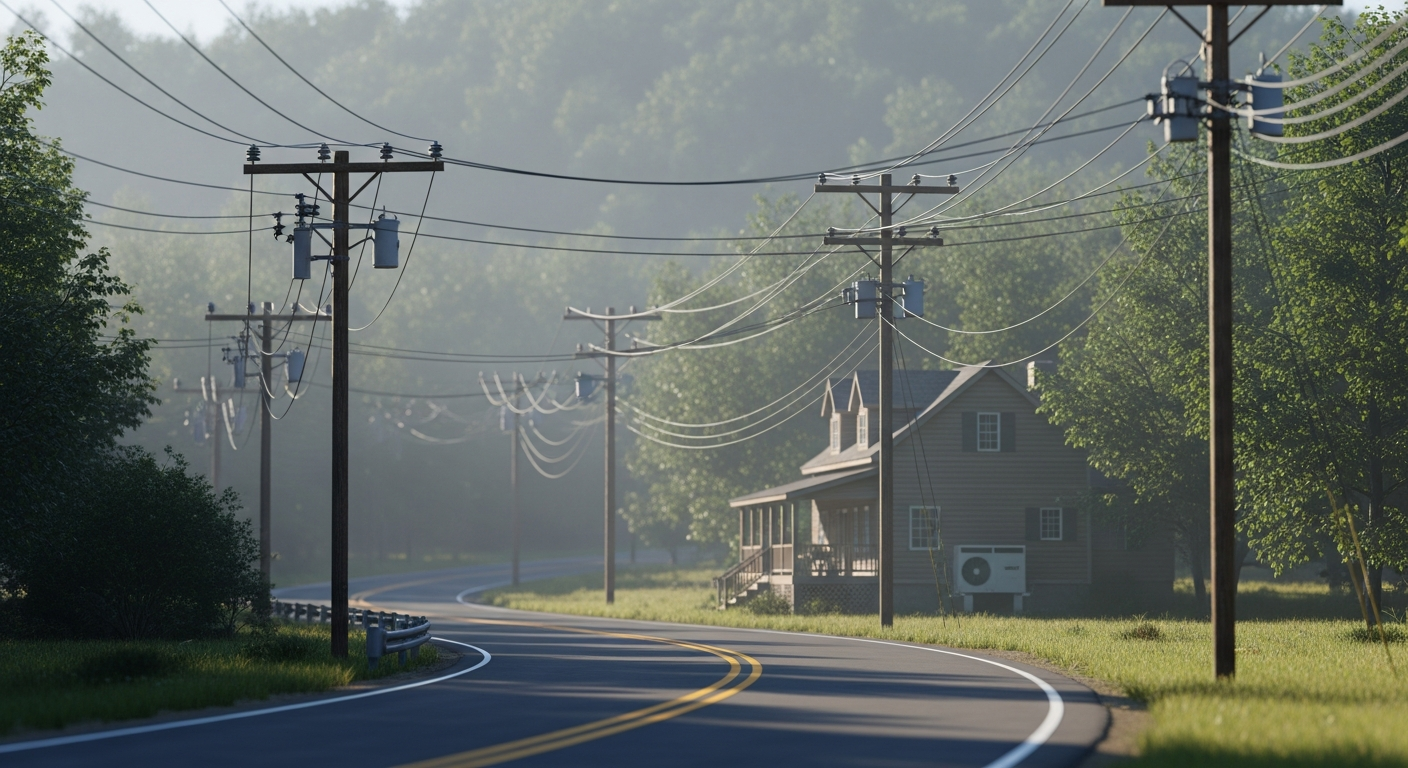
Adding to the thrill of these rising costs is our location. We live "out there," where the scenery is beautiful but the infrastructure is vulnerable. In the Netherlands, cables are buried deep underground, safe from the world. In West Virginia, the power lines hang above ground like laundry. Every falling branch, heavy snowfall, or curious squirrel can cause total mayhem.
And in a forced-air house, no power means no hurricane—which means no heat. The next logical step for this "Man" is a gas-run backup generator or a battery-backed solar grid. But that is a struggle for another year and another blog—especially since solar panels in the US are a completely different, and very expensive, story.