
The Car Man.
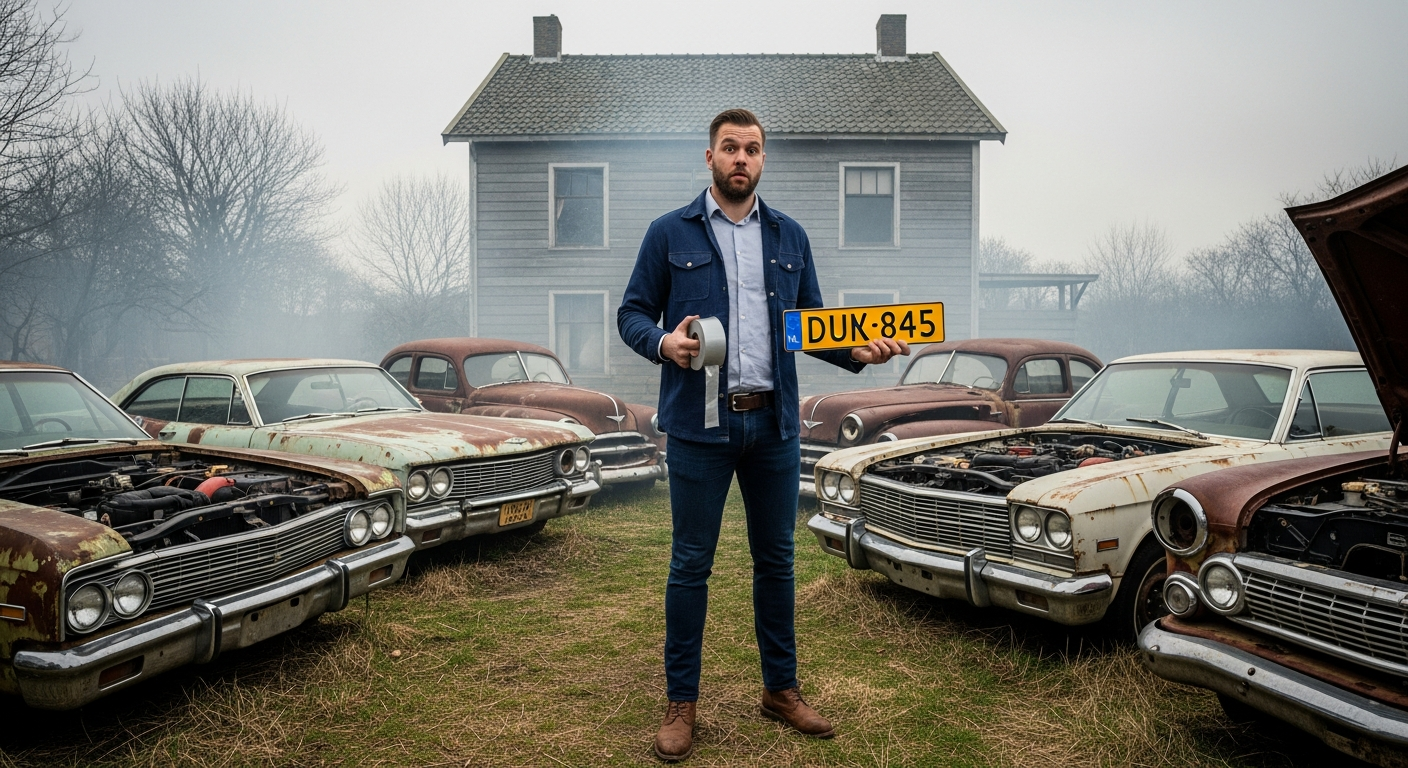
At this moment, we have two cars. But, like proper Americans, we have four parked on our land.
One is in such bad shape it might break in half if it hits a pothole; one needs repairs because it stalls after fifteen minutes of driving; and then there is my wife’s car and my truck. I have never driven through the Netherlands and seen anything like the "front yard collections" you see here. We’ve driven past houses with ten cars in varying states of deterioration—some aren't even recognizable as vehicles anymore. The common excuse is always, "Yeah, I’ll fix it up when I have time," or "It’s still worth a lot in parts." And yet, there they sit for years, slowly integrating themselves with the local flora.
Car maintenance here is expensive, which is a bit of a paradox. The roads are notoriously bad, meaning everyone needs regular work, but at $180 an hour, people suddenly become highly skilled DIY mechanics—or they know a guy who managed to fix a car once and now is the expert and has a lift in his barn. Consequently, the amount of duct tape and zip ties (tie-wraps) holding cars together on the highway is truly staggering.
In the Netherlands, we have the APK. It is a strict, mandatory check. In West Virginia, the inspection mostly checks if your lights work, if the exhaust isn't too loud, and if you used the right brand of duct tape. In the Netherlands, they check everything: do the brakes apply even pressure? Are the headlights aligned to the exact millimeter? Are the windows tinted just a fraction too much? If you fail, you fix it immediately or face a mountain of fines.
This strictness exists because the Netherlands has some of the highest population and traffic densities in the world. A single car breaking down on a Dutch highway can trigger a 30-mile traffic jam in minutes. The APK ensures cars are not just "safe" in a crash, but reliable enough not to die during a busy commute. I told some friends here that if West Virginia suddenly adopted Dutch standards, at least 25% of the cars on the road would be towed away immediately—and that was me being generous!
The systems themselves are worlds apart. In the Netherlands, the license plate belongs to the car, not the owner. It’s a centralized system that tracks everything: taxes, insurance, and even mileage. Every time you visit a dealer, the odometer is logged to prevent "rolled back" meters.
Interestingly, while the Dutch are strict on the car, they are different with the driver. Speeding tickets and fines do not impact your insurance rates—only an accident caused by you does. There is no Carfax to see a vehicle's accident history, and there are absolutely no vanity plates. The Dutch government declined to offer them, likely to avoid the hassle of approving words. Even regular plates are censored; you will never see combinations like NSB (the Dutch Nazi party), KKK, or even GAY to avoid any potential offense.
Lastly, the Road Tax makes more sense to me back home. It’s based on the weight of the vehicle and the fuel type, not the car's market value. After all, it’s the weight of the car that actually impacts the physical road, not how much you paid for it!
I do have to confess, though—I’ve never worked on cars as much as I do right here. Next up is replacing the rear bumper after someone parked their car in it, and then fixing the Mode Door Actuator—another part I’d never even heard of before moving here.
Now, where did I put my duct tape?